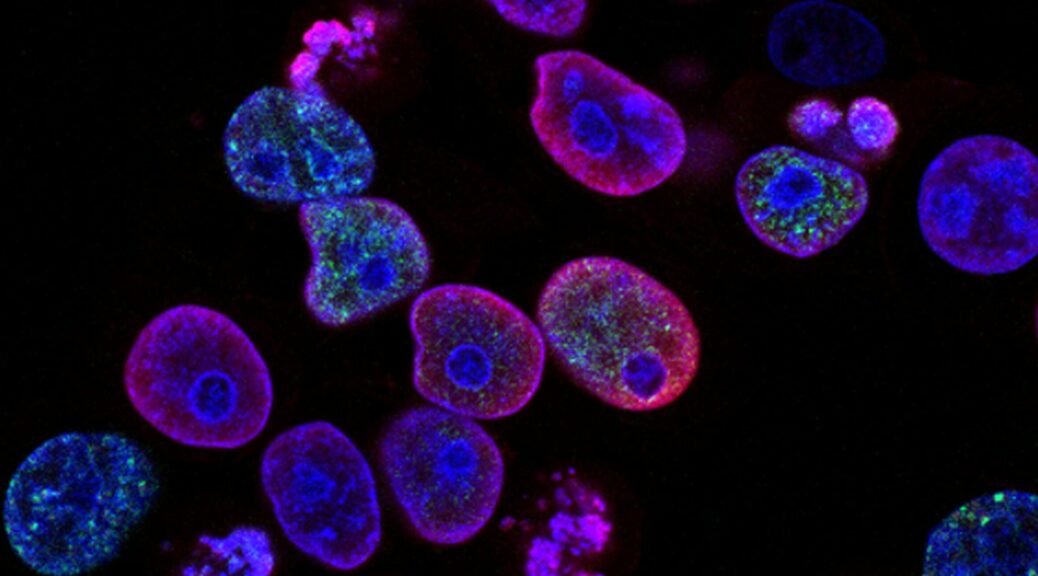
Your DNA Breaks Thousands of Times a Day. Here’s Why You’re Still Alive
Here’s something you probably didn’t learn in biology class: your DNA is being damaged right now. Not occasionally, not under extreme circumstances, but constantly. Across basically every cell in your body, thousands of times a day. Your DNA being damaged is more common and more “voluntary” than blinking or breathing.
And yet here you are. Fully intact. Which is actually the interesting part.
The Problem With Being Alive
Your DNA has a lot of enemies, and the most surprising ones aren’t external. Yes, UV radiation from sunlight damages your DNA. Yes, environmental toxins and chemicals do too. That part makes intuitive sense. But sometimes, the enemy is closer than you’d like to admit.
A significant chunk of DNA damage comes from your own body just… running normally. Just fulfilling its bodily functions.
The very chemical reactions keeping you alive: breaking down food, generating energy, building proteins, also produce reactive byproducts as a side effect. Some of those byproducts are unstable molecules that collide with your DNA and chemically alter it. Even oxygen, the thing you can’t survive without, contributes to this through something called reactive oxygen species.
When your cells use oxygen to generate energy, the process occasionally spits out unstable molecules as a byproduct. These molecules, called reactive oxygen species or ROS, are missing an electron, which makes them frantically reactive. They essentially go looking for something to steal an electron from, and your DNA is an unfortunate target. You’ve probably seen the word “antioxidant” on every smoothie and skincare product ever made without really knowing what it means. This is what it means. Antioxidants donate electrons to these unstable molecules to calm them down before they cause damage. Your cells actually produce their own antioxidants for exactly this reason. But the system isn’t airtight, and some ROS still get through.
Your metabolism is keeping you alive and quietly causing chaos at the same time. Biology is funny like that.
Then there’s the copying problem. Every time a cell divides, it has to duplicate your entire genome, roughly three billion letters of genetic code, with near-perfect accuracy. Even with remarkably precise molecular machinery, occasional errors are realistically inevitable. Imagine copying a three billion character document and being expected to make essentially zero mistakes.
So between environmental damage, your own metabolism, and copying errors, DNA damage isn’t some rare emergency. It’s just a normal consequence of being a living thing.
Your Cells Are Running a Constant Repair Operation
This is where it gets genuinely impressive.
Your cells contain specialised repair systems whose entire job is finding and fixing DNA damage before it becomes a problem. Proteins move along your DNA strands continuously, scanning for anything that looks wrong: a warped base, a broken strand, a mismatched letter from a copying error.
When they find something, they remove the damaged section and rebuild it using the intact strand as a template. The correct sequence gets restored. The molecular typo gets erased and rewritten.
Different repair systems handle different types of damage. There’s one for UV-induced warping, another for chemical modifications, another specifically for catching replication mistakes. It’s a whole coordinated system, running quietly in the background of every cell, all the time.
Across your entire body, billions of these repair events happen every single day. You don’t notice any of it, and trust me, if you did, you’d be quite stressed out and cortisol levels would be through the roof. Thankfully, your cells are just getting on with it.
When One Gets Through
The repair systems are good. They’re not perfect.
Occasionally, a piece of damage slips through undetected and becomes a mutation: a permanent change in the DNA sequence. Most of the time this doesn’t matter much, because the mutation lands somewhere that doesn’t significantly affect how the cell functions, and nothing changes.
But if mutations accumulate in genes that regulate cell growth and division, the consequences can be serious. This is one of the core biological mechanisms behind cancer. Not a single dramatic mistake, but a gradual buildup of small errors that escaped repair, slowly disrupting the controls that keep cell growth in check.
A rare condition called xeroderma pigmentosum (more on that in a future post) shows just how critical these repair systems are. Normally, when UV light hits your DNA, it causes two neighbouring bases to fuse together in a way they’re not supposed to. Your repair system spots this, snips out the damaged section, and rewrites it correctly. In people with xeroderma pigmentosum, that specific repair mechanism is broken. So the damage just stays there. It accumulates every time they’re exposed to sunlight, mutations build up rapidly, and the risk of skin cancer becomes extremely high even from minimal sun exposure. Some people with this condition have to avoid daylight almost entirely.
It’s a stark reminder of how much we take this machinery for granted when it’s working.
What This Actually Means
We tend to imagine DNA as something static and permanent, a fixed set of instructions sealed safely inside our cells. The reality is messier and honestly more fascinating.
Your genome is constantly being damaged, scanned, repaired, and occasionally altered. It’s less a pristine blueprint and more a living document under continuous maintenance, one that your cells have been quietly patching up every second of every day since before you were born. Yes, even when you were an oblivious fetus floating around in amniotic fluid.
Your repair crew hasn’t taken a single day off.
And they are the only reason you’re still here.