Is Your Cat Controlling Your Mind? The Truth About Toxoplasma
About one in three people on Earth are currently carrying a microscopic parasite in their brain tissue. Most of them have no symptoms. Most of them will never know. And a significant number of them probably own a cat.
The parasite is called Toxoplasma gondii, and it is one of the most successful, most widespread, and most genuinely fascinating organisms on the planet. Not because it’s particularly dangerous to most people, but because of what it does, how it does it, and what it implies about the relationship between a parasite and its host’s brain.
What Even Is Toxoplasma
Toxoplasma gondii is a single-celled parasite. It’s not a virus or a bacteria but rather something in its own category entirely. Its name comes from the Greek word toxon, meaning “bow” or “arc,” after its tiny crescent shape. It belongs to the same group of parasites that causes malaria, which should give you some idea of the company it keeps.
It infects warm-blooded animals like birds, rodents, livestock, and humans pretty indiscriminately and is not particularly fussy about who it moves into. But it can only sexually reproduce inside one specific type of host.
Cats. Only cats.
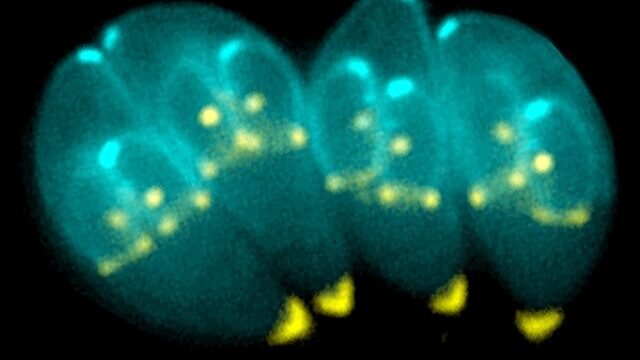
The domestic cat and its wild relatives are the only animals on Earth where Toxoplasma can complete its full reproductive lifecycle. Every other host it infects is essentially a biological waiting room — somewhere to survive and sit quietly until it can find its way back to a cat’s intestine.
And this is where it starts getting interesting… and a bit morbid.
The Life Cycle
When a cat eats an infected rodent or bird, Toxoplasma reaches its preferred host and reproduces sexually in the cat’s intestine. After one to three weeks, the cat begins shedding millions of microscopic eggs called oocysts in its faeces.
However, fresh faeces isn’t actually the main risk. Oocysts usually take one to five days to become infectious after being shed. So it’s the cat faeces that sits around in soil, on unwashed vegetables, in litter boxes that haven’t been cleaned, that’s the problem.
From there, any warm-blooded animal that accidentally ingests oocysts, whether through contaminated soil, water, unwashed produce, or undercooked meat, becomes an intermediate host meaning Toxoplasma can survive and form cysts inside them, but can’t sexually reproduce. The parasite multiplies, forms dormant cysts in muscle and brain tissue, and waits.
Those cysts can stay in your body for life. Quietly. Indefinitely. Inside warm-blooded animals like you and me, the parasite can make millions of copies of itself, but those copies are trapped inside you forever. They have no exit route. They can’t get into food, soil or water to infect the next person.
The three main ways humans pick it up are eating undercooked meat containing cysts (especially pork, lamb or venison), contact with cat faeces (litter boxes, gardening without gloves, touching your face after handling contaminated soil), and mother to child transmission during pregnancy, which is why pregnant people are advised to avoid changing litter boxes.
You cannot catch it from another person in normal circumstances. And no, you don’t need to rehome your precious fur baby!
The Concerning Mouse Experiment
When Toxoplasma infects a rodent, something quite strange happens.
Healthy mice and rats are naturally terrified of cats. This makes obvious evolutionary sense: cats eat them, so avoiding cats is a survival strategy baked into rodent behaviour over millions of years. When a rodent smells cat urine, its stress response activates and it runs the other way. Every time.
Except when it’s infected with Toxoplasma, which causes infected rodents to lose this fear response. Not entirely, not dramatically, but specifically and measurably. Studies have shown that infected rodents don’t just stop being afraid of cat odour; some of them actually become attracted to it. They move towards the smell rather than away from it.
The result is that infected rodents are significantly more likely to be caught and eaten by cats, which is exactly what Toxoplasma needs. Once the infected rodent is eaten, Toxoplasma reaches its preferred host, reproduces, and gets shed in cat faeces ready to start the cycle again.
Worth pausing on the fact that Toxoplasma is a single cell with no brain, no nervous system, and absolutely no awareness of what it’s doing. It isn’t orchestrating anything. It’s just chemistry shaped by millions of years of evolution, and that chemistry happens to rewire the fear circuitry of a rodent’s brain well enough to walk it straight into a cat’s path. The cycle is, depending on one’s own perspective, either deeply fascinating or deeply unsettling. Possibly both. The parasite has essentially engineered its own transportation system inside another organism’s brain.
While the mechanism behind this is still being researched, scientists have a reasonable picture of what’s happening. Toxoplasma forms cysts preferentially in the amygdala, the part of the brain responsible for processing fear and threat responses. It also produces an enzyme involved in dopamine production, further interfering with how the infected rodent processes certain stimuli. The rodent isn’t being puppeted in a science fiction sense, but its fear circuitry is being quietly, specifically rewired in a way that benefits the parasite enormously.
Okay But What About Humans
This is the part everyone probably wants to know about (including me, when I first came across this parasite).
For the vast majority of people with a healthy immune system, Toxoplasma infection causes virtually zero symptoms. Literally none. If symptoms do show up they’re usually mild: swollen lymph nodes, muscle aches, low fever, fatigue — and it usually clears up within weeks. Your immune system suppresses the parasite, making it go dormant, where it forms cysts in various tissues including the brain, and sits there. Possibly forever. Without you ever knowing.
Two groups actually need to be careful: pregnant people, because a first time infection during pregnancy can seriously affect a developing foetus, and immunocompromised individuals, where a dormant infection can reactivate and cause severe complications including brain inflammation.
For everyone else, don’t worry, your immune system has this handled.
Now, the mind control question.
Some researchers have looked at whether Toxoplasma has measurable effects on human behaviour. Studies have suggested associations with slightly increased risk-taking, slower reaction times, and altered responses to certain stimuli. Some research has looked at correlations with traffic accidents and links to certain psychiatric conditions.
The honest answer is that we don’t fully know. The effect in humans, if it exists at all, is small. Not mind control. More like statistically measurable but not something you’d notice in daily life. The research is real but contested, and nowhere near as dramatic as the headlines make it sound.
What we do know is that a parasite capable of rewiring a rodent’s brain is sitting dormant in the brain tissue of roughly one third of all humans alive right now.
Whether or not it’s doing anything to us, that’s a sentence worth sitting with for a moment and hopefully more research will give us a more conclusive answer soon.
Myth vs. Fact
“If you own a cat, you definitely have it.”
- Not necessarily. Owning a cat doesn’t guarantee infection. Indoor cats who don’t hunt are low risk. Hygiene matters more than pet ownership.
“You should rehome your cat if you’re pregnant.”
- Absolutely not. Pregnant people just need to avoid litter box duty or take precautions like gloves. Keep your cat.
“Toxo makes you love cats.”
- No solid evidence for this. You can love cats entirely on your own.
“It’s rare.”
- One in three humans. It is one of the most common parasites on Earth.
Prevention
Simple steps that actually make a difference:
- Cook meat thoroughly, especially pork, lamb and venison
- Wash fruit and vegetables properly before eating
- Wash your hands after handling raw meat or gardening
- If someone in your household is pregnant or immunocompromised, they should avoid changing the litter box
- Clean the litter box daily, oocysts need one to five days to become infectious, so daily scooping cuts the risk significantly
- Keep cats indoors if possible, since indoor cats are far less likely to hunt infected prey
That’s genuinely it. No panic required.
The Bigger Picture
Toxoplasma kind of forces you to rethink what “you” even are. We like to believe we’re fully in control, making our own choices, running on our own biology. But your body isn’t just you. It’s full of bacteria, viruses, dormant infections, parasites, all interacting with you in ways we’re still figuring out.
And it’s not like Toxoplasma planned any of this. There’s no intention behind it. It’s just natural selection, slowly shaping things over time until it ends up looking almost intentional anyway.
The ones that happened to interfere with rodent behavior got eaten by cats more often, which meant they reproduced more, which meant more Toxoplasma with that same trait. Over millions of years, that’s how you end up with a brainless single cell that’s accidentally become very good at manipulating brains.
It’s one of the more elegant, and deeply unsettling, examples of evolution producing something that looks almost like intelligence.
Unfortunately, your cat is probably not plotting world domination. But the parasite living in a third of all human brains got there through one of the most sophisticated biological strategies on the planet.
Sleep well. 🧬